

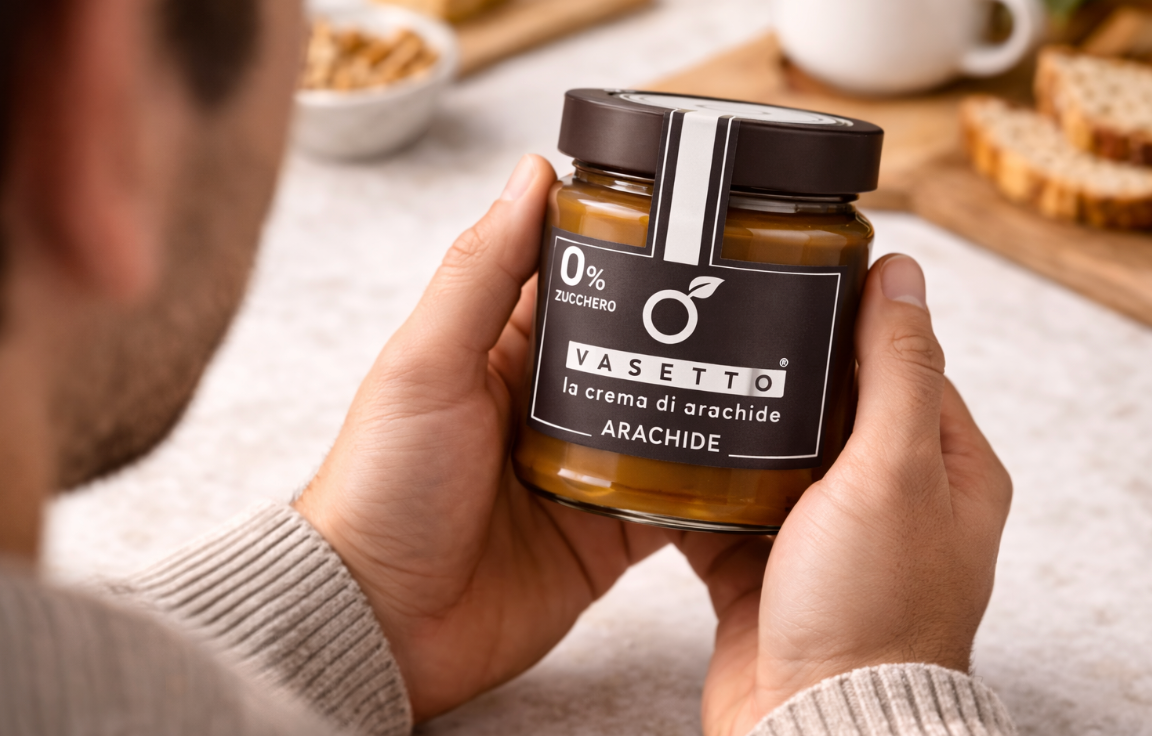
Peanut butter is one of those foods many people keep at home but always use the same way: on bread, and that's it.
Yet it's one of the most versatile and interesting ingredients you can keep in your pantry. It can turn an ordinary breakfast into something truly satisfying, enrich both sweet and savory recipes, and become the star of protein snacks for anyone who works out or wants to make more mindful nutritional choices.
In this article we share four concrete, tasty and practical ideas to take peanut butter well beyond the classic slice of bread.
4 tasty, practical ways to eat peanut butter
Toast with peanut butter, dark chocolate and banana
The classic American pairing of peanut butter and fresh fruit, reimagined in an indulgent and nutritionally complete way.
On a slice of lightly toasted whole-wheat or rye bread, spread a generous layer of sugar-free peanut butter. Add a few slices of banana, whose natural sweetness perfectly balances the toasty, slightly bitter flavor of the peanuts, and a few shavings of 80% (or higher) dark chocolate.
Porridge or overnight oats with peanut butter and honey
Peanut butter melted into hot porridge or layered over cold overnight oats is one of the most satisfying ways to start the day.
For hot porridge, add a spoonful of peanut butter straight into the pot when the oats are almost ready: it will partly melt, creating a creamy, velvety texture with a much richer flavor than plain porridge made with milk.
For overnight oats, prepare the base the night before with oats, plant-based milk and chia seeds, and in the morning add peanut butter as a topping, along with a thin drizzle of raw wildflower honey and a few apple slices.
The combination of slow-release carbohydrates, protein and healthy fats provides steady energy all morning.
Protein smoothie with peanut butter, cocoa and plant-based milk
Adding a spoonful of peanut butter to the blender turns an ordinary smoothie into a truly nourishing, creamy and satisfying drink.
The basic recipe for a breakfast protein smoothie calls for 200 ml of almond or oat milk, one ripe frozen banana (for creaminess and natural sweetness), a heaping spoonful of sugar-free peanut butter and a teaspoon of unsweetened cocoa powder.
Blend everything and you get a drink similar to a chocolate frappuccino, but with no added sugars and an excellent nutritional profile: about 15-20 grams of protein, healthy fats and complex carbohydrates.
For anyone who trains in the morning, it's a quick, complete option to have within 30-45 minutes after exercise.
Energy balls with peanut butter, oats and chocolate chips
Energy balls are snacks you can make ahead, keep in the fridge and always have on hand as a healthy, filling bite.
The basic recipe is super simple: 100 grams of rolled oats, 3 heaping tablespoons of sugar-free peanut butter, 2 tablespoons of raw honey, 30 grams of dark chocolate chips and, if you like, a tablespoon of chia seeds to boost your intake of omega-3s and fiber.
Mix all the ingredients in a bowl, shape into walnut-sized balls and refrigerate for at least an hour.
How to choose the best peanut butter for these recipes
The quality of the peanut butter makes a huge difference to the final result of all these recipes.
A spread made with 90-100% roasted peanuts and no added sugars, palm oil, salt or emulsifiers has an authentic, intense flavor that enhances every recipe it's used in, while an industrial spread with lots of added ingredients tends to taste more artificial and have a less pleasant texture.
When choosing a peanut butter, check that the ingredients are very few and all recognizable: ideally just peanuts, or peanuts with a minimal amount of sunflower oil for spreadability.
Read also: Best peanut butter: a buying guide
How much peanut butter to eat per day: nutritional guidelines
Peanut butter is a very calorie-dense food: 100 grams provide about 580-620 kcal, depending on the recipe. This doesn't mean you should avoid it, but that you should eat the right portion.
The standard portion recommended by nutrition experts is about 20-30 grams, roughly one and a half heaping tablespoons, which provides between 115 and 175 kcal. In this amount, peanut butter supplies about 5-7 grams of protein, quality fats and valuable micronutrients without weighing down your daily calorie plan.
For athletes who train intensely or people with high energy needs, the portion can be increased without too much concern, always as part of a balanced diet.
Ready to discover how versatile peanut butter is? Buy Vasetto.it's sugar-free peanut butter and start experimenting with these recipes: few ingredients, lots of flavor, zero compromises.


