

Articles

Why You Should Try a Legume-Based Spread
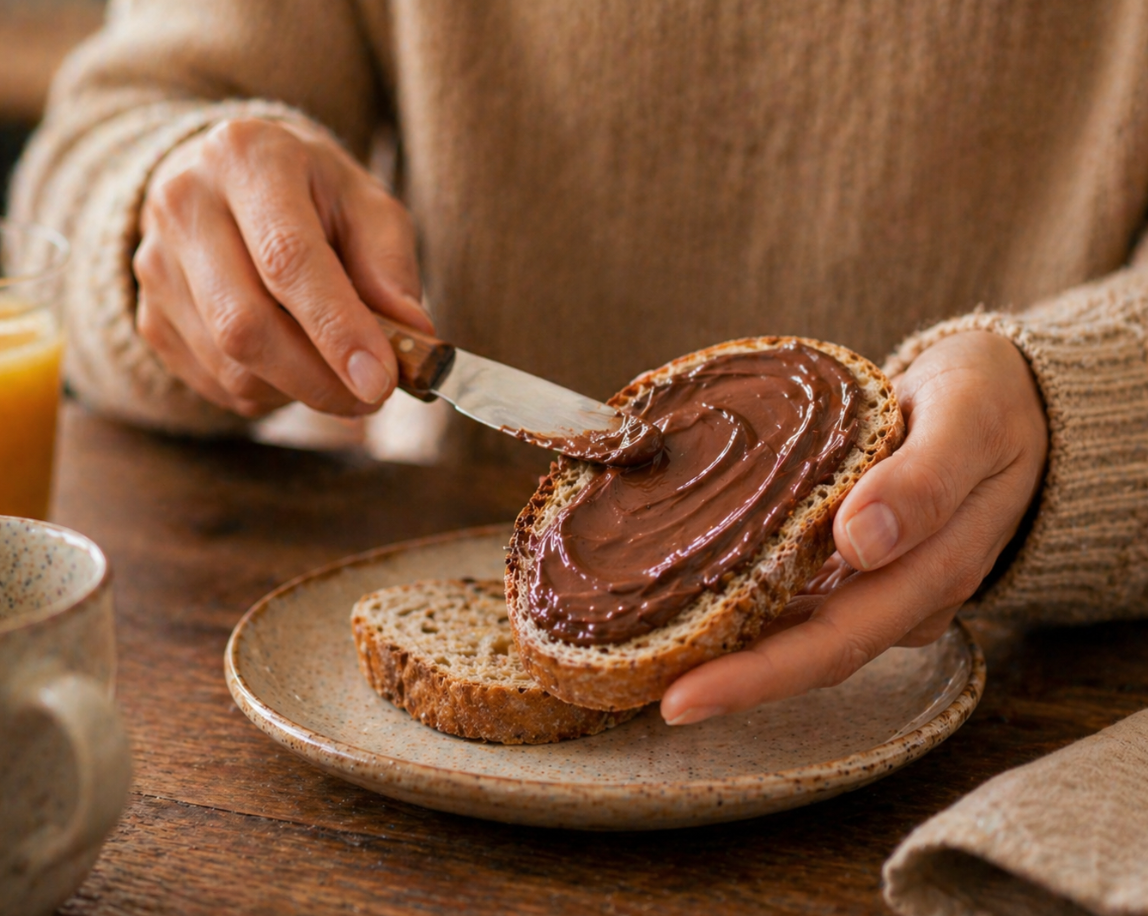
When it comes to chocolate spreads, the first thing that comes to mind is hazelnut. That’s understandable: it has been the dominant ingredient for decades, the one that defines the taste and texture of almost everything we find on the shelves. But what happens when hazelnuts aren’t an option, because of an allergy, an intolerance or by choice? And above all, are there alternatives that don’t sacrifice taste? The answer is yes, and it comes from an unexpected ingredient: legumes. In this article we explain what legume-based spreads are and why they are becoming an increasingly popular choice. What is a legume-based spread? A legume-based spread uses legumes - chickpeas, lentils, peas, beans - as its main ingredient instead of the nuts or vegetable oils typical of traditional spreads. The goal is to achieve a creamy texture and a pleasant taste, but with a completely different nutritional profile: more protein, more fiber, less saturated fat. The real advantages over classic spreads Compared to a traditional chocolate spread, a legume-based spread offers benefits you can notice both on your plate and in your body: legumes are naturally rich in plant protein, which makes them an ideal base for anyone following a vegan diet or wanting to increase their protein intake without resorting to supplements. They are also one of the best sources of dietary fiber, which is essential for gut health and for staying full longer after meals. On top of that comes an advantage few other bases can offer: legumes are naturally gluten-free and lactose-free, and they don’t belong to the tree nut category. This makes them suitable for people with allergies or intolerances that make it hard to find safe spreads. Finally, thanks to their lower glycemic index compared to simple sugars, they release energy gradually, without the blood sugar spikes typical of conventional spreads. To learn more about all the benefits, take a look at our article "Legume-Based Spreads: Are They Really Good for You?" Who has everything to gain Legume-based spreads aren’t just for people on special diets. They are a smart choice for a much wider range of people. People allergic to tree nuts find in these spreads an alternative designed for those who can’t eat them. Vegans and vegetarians get a tasty, versatile source of plant protein. Families with children allergic to tree nuts can give their kids something delicious, checking the label as always. But legume-based spreads also appeal to anyone who simply wants to eat better without giving up pleasure. People keeping an eye on their sugar intake, athletes looking for a protein alternative to industrial snacks, the curious who love discovering new flavors: everyone can find something worth trying in this category. What’s still missing on the market Although interest in legume-based spreads is growing, a close look at what’s available today reveals a recurring problem: a single product rarely manages to combine everything you’re looking for. Some use legumes of uncertain or imported origin. Others eliminate tree nuts but add sugar. Others focus on the protein profile but don’t give up unnecessary ingredients such as refined oils or artificial flavorings. The missing combination, one that very few have built consistently, is a base of Italian legumes, with no allergens among the ingredients, no added sugar and produced through a controlled supply chain. Vasetto’s spread: Italian chickpeas and yellow peas, zero compromises Our cocoa and legume spread is made at Cioccolato Puro in Pinerolo, where we have been working with chocolate with care and passion for over 30 years. The base is Italian chickpeas and yellow peas, chosen for their quality and processed without additives, refined oils or artificial sweeteners. The numbers speak for themselves: 21 g of protein and 17 g of fiber per 100 g. Completely nut-free, gluten-free, lactose-free, with no added sugar. 100% vegan. A choice that doesn’t make you choose between health and taste. Few cocoa spreads can say this. It has no allergens, no sugar, and it’s made with Italian legumes. How to enjoy it It’s delicious in many different ways: spread on whole-grain bread or rice cakes at breakfast, used as a filling for vegan crepes, or paired with fresh fruit such as apple or banana for a quick snack. Or simply by the spoonful, for a guilt-free moment of pleasure. Its creamy texture and bold cocoa flavor make it versatile and satisfying on any occasion. Discover our legume and chocolate spread Discover how good an uncompromising chocolate spread can be: try our nut-free legume-based spread.
Learn more
Legume-Based vs. Nut-Based Spreads: What Really Changes? A Complete Comparison
Legumes or nuts: which is the best base for a spread? A complete comparison of taste, nutrients, allergens and suitability for different diets.
Learn more
Legume-Based Spreads: Are They Really Good for You?
Until a few years ago, the idea of spreading chickpeas on a slice of bread would have raised more than a few eyebrows. Today, legume-based spreads are one of the fastest-growing product categories in the healthy food segment, and the reasons are as solid as their nutritional profile. But are they really good for you? Are they suitable for everyone? And how do they fit into a balanced diet? In this article we answer all these questions with concrete data and a few practical considerations. What are legume-based spreads? Legume-based spreads are products in which the fat and protein component typically provided by nuts is replaced, wholly or partly, by legumes such as chickpeas, yellow peas, lentils or beans. The legumes are turned into flour or paste, then combined with other ingredients depending on the version: cocoa and cocoa butter for chocolate varieties, spices or herbs for savory ones, fruit for sweet versions. The result is a spread with a thick, creamy texture and a neutral base flavor that lends itself to many different flavor combinations. The most important feature from a nutritional point of view is that legumes bring with them a wealth of complete plant proteins, soluble and insoluble fiber, minerals such as iron and magnesium, and a naturally moderate glycemic index. All this gluten-free, lactose-free and, in the case of versions designed for allergies, nut-free. The main benefits: protein, fiber and glycemic index Plant protein to support muscles and satiety Legumes are among the richest and most accessible plant sources of protein. A spread made with chickpea and yellow pea flours can contain up to 20 grams of protein per 100g of product, a figure that is hard to match even in traditional nut-based spreads. The plant proteins in legumes help maintain muscle mass, support satiety and make the spread a much more substantial option than conventional spreads, which are often low in nutrients. For athletes, adding a high-protein spread to breakfast or a pre-workout snack is a smart way to increase daily protein intake without relying on supplements. For older people, maintaining a good intake of plant protein is important to counteract age-related muscle loss. Fiber for gut health and blood sugar control Fiber is perhaps the most underrated nutrient in the modern diet. Legume-based spreads contain significant amounts of it: you can find products with 15-17 grams of fiber per 100 g, a considerable amount given that the recommended daily intake for an adult is around 25-30 grams. Dietary fiber performs essential functions: it feeds the gut microbiota, slows the absorption of sugars by reducing blood sugar spikes, improves bowel movement and contributes to a feeling of fullness. This profile makes them an interesting choice for people who need to keep their blood sugar under control, such as people with type 2 diabetes, and for those following diets aimed at weight loss or cholesterol control. With no added sugars, a spread made from legumes and cocoa is one of the most balanced sweet snacks around. Who are they for? All the profiles that benefit from a legume-based spread The versatility of legume-based spreads is one of their strengths. They're naturally vegan, as they contain no animal-derived ingredients. They're gluten-free, which makes them safe for people with celiac disease and wheat sensitivity. They contain no lactose, solving the problem for those who are intolerant to dairy products. And of course, in the nut-free version, they're a concrete answer for people living with walnut or hazelnut allergies. They're also suitable for children, provided there are no specific legume allergies, and they're a way to introduce this food group in a form that appeals even to younger palates. For families with multiple dietary needs, having one product that meets so many different restrictions at once is a major practical simplification. Italian ingredients: why origin matters Not all legume-based spreads are the same. The quality of the ingredients, and in particular the origin of the legumes, makes a real difference in terms of both taste and sustainability. Chickpeas and yellow peas grown in Italy are produced in agricultural settings with high food safety standards, with quality controls on raw materials and traceable supply chains. Choosing a spread made with Italian legumes also means supporting local agriculture, with a lower environmental impact than imports from faraway countries. How to include a legume-based spread in your daily diet Breakfast is the most natural time to enjoy a legume-based spread. Spread on whole-grain bread, rice cakes or rusks, it offers a balance of complex carbohydrates, protein and fiber that sustains your energy until lunch without causing the blood sugar spikes and crashes typical of sugary breakfasts. If you train in the morning, it makes an excellent light, easily digestible pre-workout snack. As an ingredient in recipes, it holds up well when baked and can be used to fill desserts, as a base for dessert creams, or as a dipping sauce. If you love experimenting in the kitchen, you'll find legume-based spreads a versatile, functional ingredient that can add nutrients to dishes that would otherwise lack them. Frequently asked questions about legume-based spreads Can people with diabetes eat legume-based spreads? They may be worth considering, especially in versions with no added sugars. The fiber in legumes slows the absorption of sugars, and the product's overall glycemic index is much lower than that of traditional spreads. As always, we recommend checking the specific nutritional values of the product you choose and consulting your doctor or dietitian to include it correctly in your meal plan. How many calories do legume-based spreads have? The calorie content varies depending on the additional ingredients, especially fats. On average they range between 250 and 350 kcal per 100g, lower than traditional nut-based spreads, which often exceed 500 kcal. Their protein and fiber density, however, makes them much more filling, which means you tend to eat less of them to feel just as satisfied. Can people with legume allergies eat them? No. Anyone with a legume allergy, such as to soy, peanuts or chickpeas, should avoid these products or choose them with great care. It's essential to read the full ingredient list and allergen warnings before buying any spread, regardless of how it's described on the front of the package.
Learn more
Nut-Free Chocolate Spread: The Complete Guide for People with Allergies or Intolerances
Anyone with a tree nut allergy knows all too well how hard it is to find a chocolate spread they can enjoy without worry. The spread market is dominated by products made with hazelnuts, almonds and tree nuts in general, and finding a real alternative, truly designed for people with allergies, isn’t always easy… And yet the desire for an indulgent breakfast, a slice of bread topped with something delicious, is a simple pleasure no one should have to give up. Why tree nut allergy is a real problem when choosing spreads Tree nut allergy, which includes hazelnuts, almonds, walnuts, cashews and pistachios, is one of the most common food allergies. According to data from the Italian Ministry of Health, about 9.7% of the European adult population has a genuine tree nut allergy. In Italy, industry surveys estimate that almost one million households have at least one member who has to deal with this intolerance. Reactions can range from hives to anaphylactic shock in the most severe cases, which makes choosing foods a matter of health, not preference. How to read a spread label On the label of every product you’ll always find the ingredient list and the nutrition facts. The ingredient list, required by law, shows everything the product contains in descending order of quantity: the first ingredient is the one present in the largest amount, the last one in the smallest traces. Checking that tree nuts don’t appear anywhere on the list is the first step for people with allergies or intolerances. The allergen section, usually shown in bold or in a separate box, lists the fourteen main allergens recognized by European regulations and must always be on the label. It’s always worth taking a look at the nutrition facts too: sugar, protein, fiber and fat content say a lot about the real quality of a product, beyond what is communicated on the front of the pack. A clear, complete label is always a good sign. Alternative ingredients: what’s inside a hazelnut-free or nut-free chocolate spread Vegetable oils and seed butters Many nut-free spreads replace hazelnuts with vegetable oils such as sunflower or palm oil, or with sunflower seed butter. This solution ensures a creamy end product but often sacrifices the nutritional profile: you get a tasty spread that’s low in protein and fiber, with a high percentage of saturated fat. It’s an acceptable choice from an allergy standpoint, less so in terms of overall nutritional quality. A legume base: the most interesting alternative In recent years a far more interesting solution has been gaining ground: using legumes as the base for chocolate spreads. Chickpeas, yellow peas and red lentils, turned into flour, provide a creamy, thick texture, an excellent supply of plant protein and fiber, and are naturally free from nut-related allergens. The result is a spread that works beautifully in terms of texture, has a balanced flavor thanks to the combination with cocoa, and suits a great many different dietary needs. Vasetto’s cocoa spread, for example, is made with 100% Italian chickpea and yellow pea flours. It contains no nuts, gluten, added sugars or milk. Every 100 g provides 21 g of protein and 17 g of fiber, numbers that make it not only safe for people with allergies but also a mindful choice for anyone who wants to eat well without giving up pleasure. Few cocoa spreads can say this: it has no allergens, no sugar, and it’s made with Italian legumes. You can discover it directly on vasetto.it. Nut-free chocolate spread: who is it for? A chocolate spread that is nut-free, gluten-free, lactose-free and has no added sugars meets the needs of a much wider audience than you might think. It’s suitable, of course, for people allergic to hazelnuts or tree nuts in general, but also for those following a vegan diet, people with celiac disease or gluten sensitivity, people who are lactose intolerant, families with children with multiple allergies and anyone on a low-sugar diet for medical or lifestyle reasons. It’s important to stress that "nut-free" doesn’t necessarily mean a lower-quality product. On the contrary, when the substitution is made with functional ingredients such as legumes, you can get a spread with a better nutritional profile than traditional alternatives, with less sugar, more protein and more fiber. How to use a hazelnut-free chocolate spread in the kitchen You can use it in all the same ways as any other spread. At breakfast on toast, rusks or rice cakes, it’s a simple way to start the day with a good amount of protein. As a filling for homemade desserts, cakes, crepes or pancakes, it holds up very well when baked and blends easily with the other ingredients. For a quick snack, a spoonful straight from the jar with some fresh fruit is a balanced and satisfying treat. Athletes will be glad to know that a spread high in protein and fiber can be a valuable addition to both pre-workout and recovery meals. Those on a low-calorie or low glycemic index diet will appreciate the absence of added sugars, which makes the product much easier to fit into a structured meal plan. Frequently asked questions about nut-free chocolate spread Does a hazelnut-free chocolate spread taste the same? It depends a lot on the ingredients used. Spreads made with legumes and pure cocoa offer an intense, full-bodied taste, different from the classic hazelnut spread but just as enjoyable. No hazelnuts doesn’t mean no flavor: quality cocoa, combined with the creamy texture of legumes, creates a rich aromatic profile that won’t disappoint dark chocolate lovers. Do legume-based spreads contain starches that raise blood sugar? Legumes have a moderate glycemic index, and their abundant fiber further slows the absorption of sugars. With no added sugars, a spread made with legumes and cocoa is one of the most favorable choices in terms of blood sugar among all the spreads on the market. However, if you have diabetes or specific metabolic conditions, it’s best to consult your doctor or nutritionist. Where can I buy a nut-free chocolate spread? You can find Vasetto’s cocoa spread directly on vasetto.it. The product comes in a 250 g jar and is made with Italian ingredients only, with no allergens, no sugar and no gluten.
Learn more
How to Eat Peanut Butter: 4 Tasty Ideas to Enjoy It Every Day
Peanut butter is one of those foods many people keep at home but always use the same way: on bread, and that's it. Yet it's one of the most versatile and interesting ingredients you can keep in your pantry. It can turn an ordinary breakfast into something truly satisfying, enrich both sweet and savory recipes, and become the star of protein snacks for anyone who works out or wants to make more mindful nutritional choices. In this article we share four concrete, tasty and practical ideas to take peanut butter well beyond the classic slice of bread. 4 tasty, practical ways to eat peanut butter Toast with peanut butter, dark chocolate and banana The classic American pairing of peanut butter and fresh fruit, reimagined in an indulgent and nutritionally complete way. On a slice of lightly toasted whole-wheat or rye bread, spread a generous layer of sugar-free peanut butter. Add a few slices of banana, whose natural sweetness perfectly balances the toasty, slightly bitter flavor of the peanuts, and a few shavings of 80% (or higher) dark chocolate. Porridge or overnight oats with peanut butter and honey Peanut butter melted into hot porridge or layered over cold overnight oats is one of the most satisfying ways to start the day. For hot porridge, add a spoonful of peanut butter straight into the pot when the oats are almost ready: it will partly melt, creating a creamy, velvety texture with a much richer flavor than plain porridge made with milk. For overnight oats, prepare the base the night before with oats, plant-based milk and chia seeds, and in the morning add peanut butter as a topping, along with a thin drizzle of raw wildflower honey and a few apple slices. The combination of slow-release carbohydrates, protein and healthy fats provides steady energy all morning. Protein smoothie with peanut butter, cocoa and plant-based milk Adding a spoonful of peanut butter to the blender turns an ordinary smoothie into a truly nourishing, creamy and satisfying drink. The basic recipe for a breakfast protein smoothie calls for 200 ml of almond or oat milk, one ripe frozen banana (for creaminess and natural sweetness), a heaping spoonful of sugar-free peanut butter and a teaspoon of unsweetened cocoa powder. Blend everything and you get a drink similar to a chocolate frappuccino, but with no added sugars and an excellent nutritional profile: about 15-20 grams of protein, healthy fats and complex carbohydrates. For anyone who trains in the morning, it's a quick, complete option to have within 30-45 minutes after exercise. Energy balls with peanut butter, oats and chocolate chips Energy balls are snacks you can make ahead, keep in the fridge and always have on hand as a healthy, filling bite. The basic recipe is super simple: 100 grams of rolled oats, 3 heaping tablespoons of sugar-free peanut butter, 2 tablespoons of raw honey, 30 grams of dark chocolate chips and, if you like, a tablespoon of chia seeds to boost your intake of omega-3s and fiber. Mix all the ingredients in a bowl, shape into walnut-sized balls and refrigerate for at least an hour. How to choose the best peanut butter for these recipes The quality of the peanut butter makes a huge difference to the final result of all these recipes. A spread made with 90-100% roasted peanuts and no added sugars, palm oil, salt or emulsifiers has an authentic, intense flavor that enhances every recipe it's used in, while an industrial spread with lots of added ingredients tends to taste more artificial and have a less pleasant texture. When choosing a peanut butter, check that the ingredients are very few and all recognizable: ideally just peanuts, or peanuts with a minimal amount of sunflower oil for spreadability. Read also: Best peanut butter: a buying guide How much peanut butter to eat per day: nutritional guidelines Peanut butter is a very calorie-dense food: 100 grams provide about 580-620 kcal, depending on the recipe. This doesn't mean you should avoid it, but that you should eat the right portion. The standard portion recommended by nutrition experts is about 20-30 grams, roughly one and a half heaping tablespoons, which provides between 115 and 175 kcal. In this amount, peanut butter supplies about 5-7 grams of protein, quality fats and valuable micronutrients without weighing down your daily calorie plan. For athletes who train intensely or people with high energy needs, the portion can be increased without too much concern, always as part of a balanced diet. Ready to discover how versatile peanut butter is? Buy Vasetto.it's sugar-free peanut butter and start experimenting with these recipes: few ingredients, lots of flavor, zero compromises.
Learn more
School Snack Ideas: Healthy, Tasty and Practical Snacks Kids Actually Eat
What should you pack in your kids’ backpack for their school snack? Discover healthy, wholesome and easy-to-make snack ideas with Vasetto.it spreads.
Learn more
Healthy Fit Breakfast Ideas: 5 High-Protein Recipes That Actually Taste Great
Looking for fit breakfast ideas that are genuinely delicious and not just "healthy"? Discover 5 practical options for athletes, people on a diet and anyone who wants to stay in shape, with Vasetto spreads.
Learn more
Protein Spreads with No Added Sugars: What to Know Before You Choose
Protein spreads with no added sugars are a dream come true for athletes and dieters. Find out what they are, how they work and why Vasetto.it's protein spreads are the right choice.
Learn more
Lactose-Free Spread: How to Choose the Right One
Are there really lactose-free chocolate spreads? Find out which ones to choose, what to look for on the label and the best options available on Vasetto.it.
Learn more